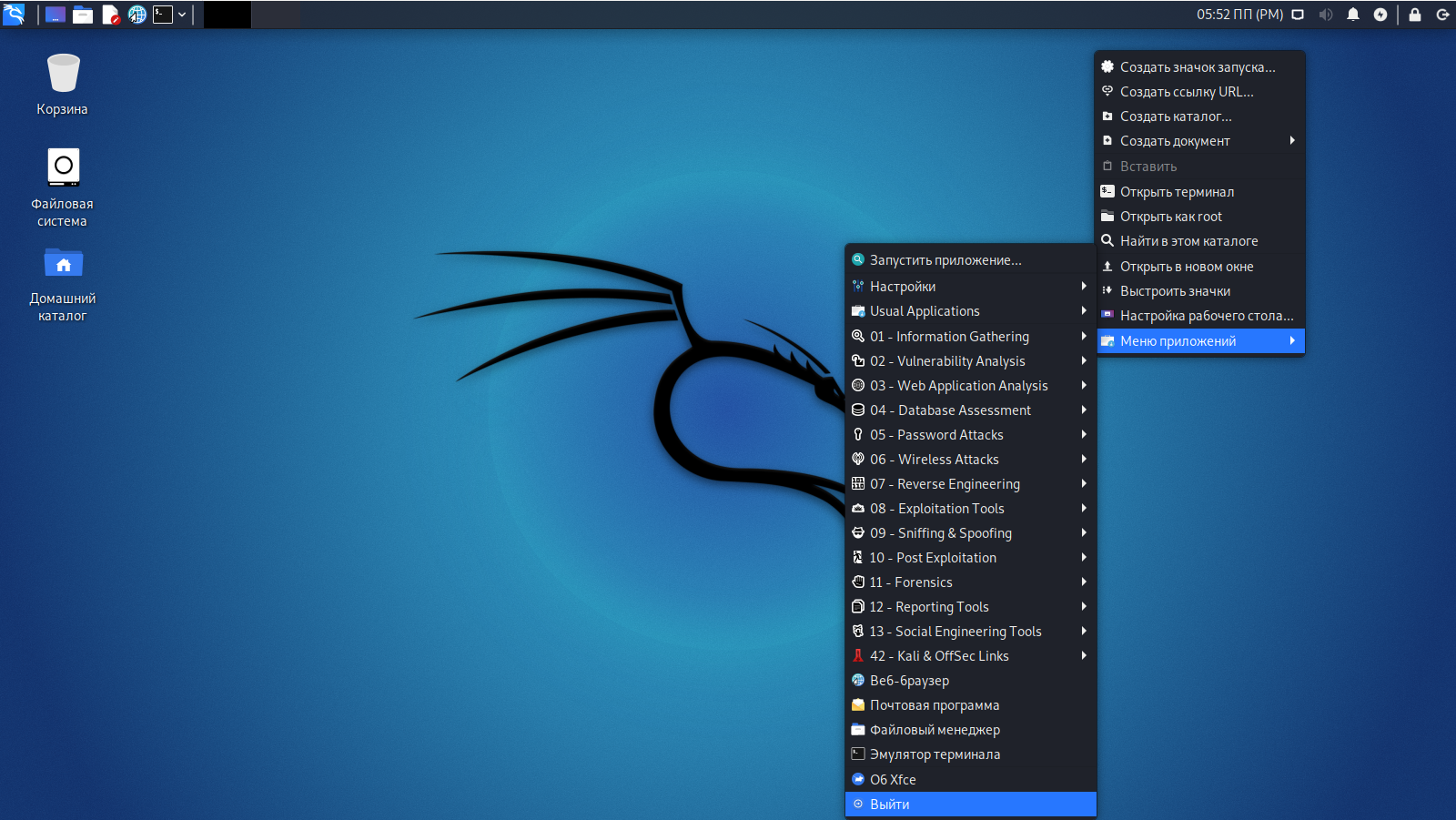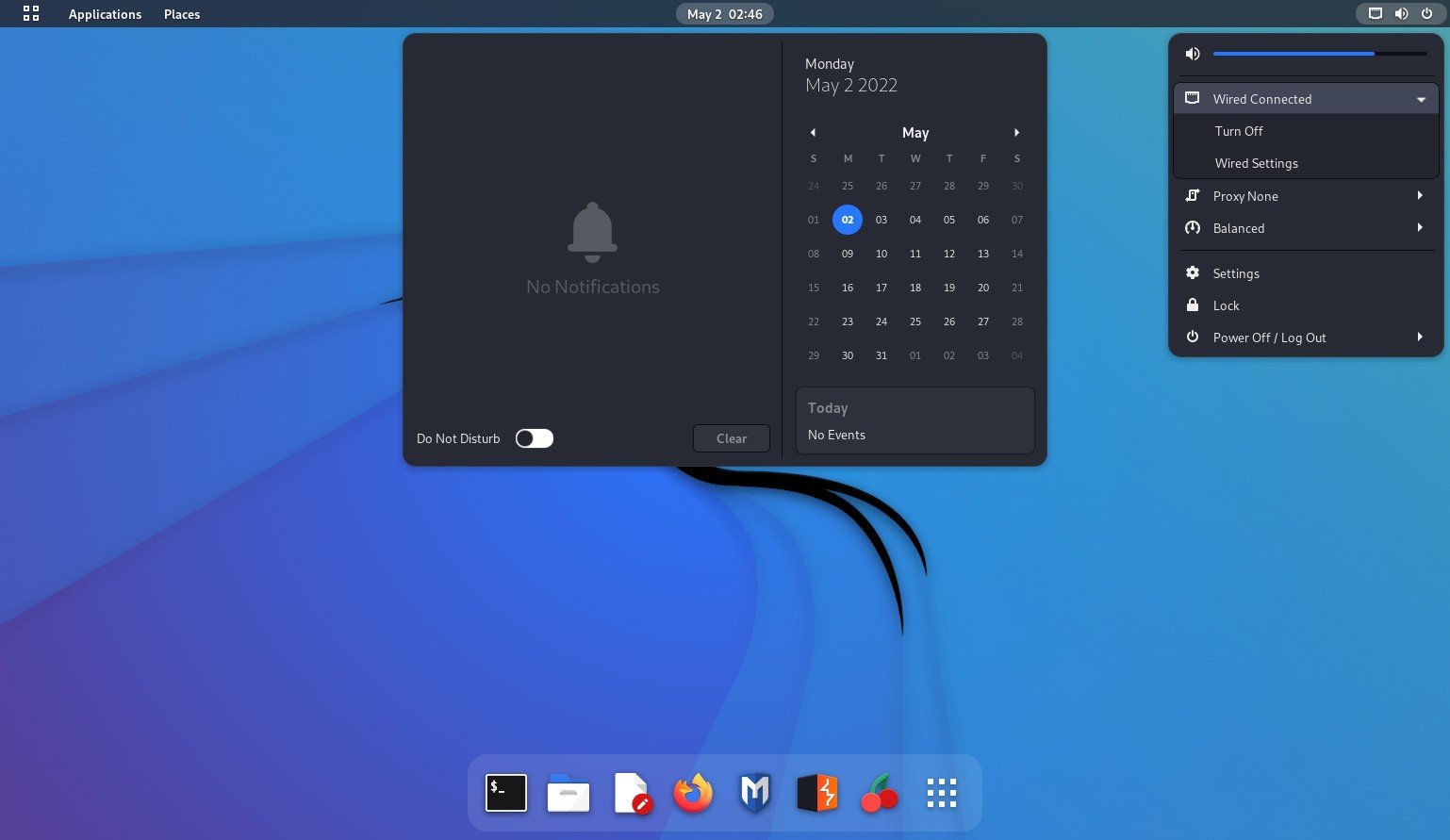
Kali Linux is a Debian-based Linux system with a number of tools for testing security risks and vulnerabilities that is intended for advanced users and security experts.
The Kali Linux operating system is intended for users and developers who test different services and systems for vulnerabilities and hackability. The bundle contains hundreds of tools that may be used to test the security of your projects and look for exploits of known flaws. Kali Linux comes in some distributions for different architectures and graphical interfaces.
Although installations are available on the MATE, Gnome, KDE, and LXDE desktop environments, the basic version of the system operates on the Xfce desktop environment. In addition to ready-to-use builds for VirtualBox and VMware virtual machines, system images for the amd64, i386, and different ARM architectures are being created.
Fundamental Goals and Use Cases
- Penetration Testing: Simulating cyberattacks to identify vulnerabilities in systems and web applications before malicious actors do.
- Digital Forensics: Analysing compromised systems and recovering lost or deleted files to trace activities during a security breach.
- Network Analysis: Capturing and reviewing data packets to detect suspicious traffic anomalies.
- Password Auditing: Testing password strength to reveal vulnerabilities that could allow unauthorized access