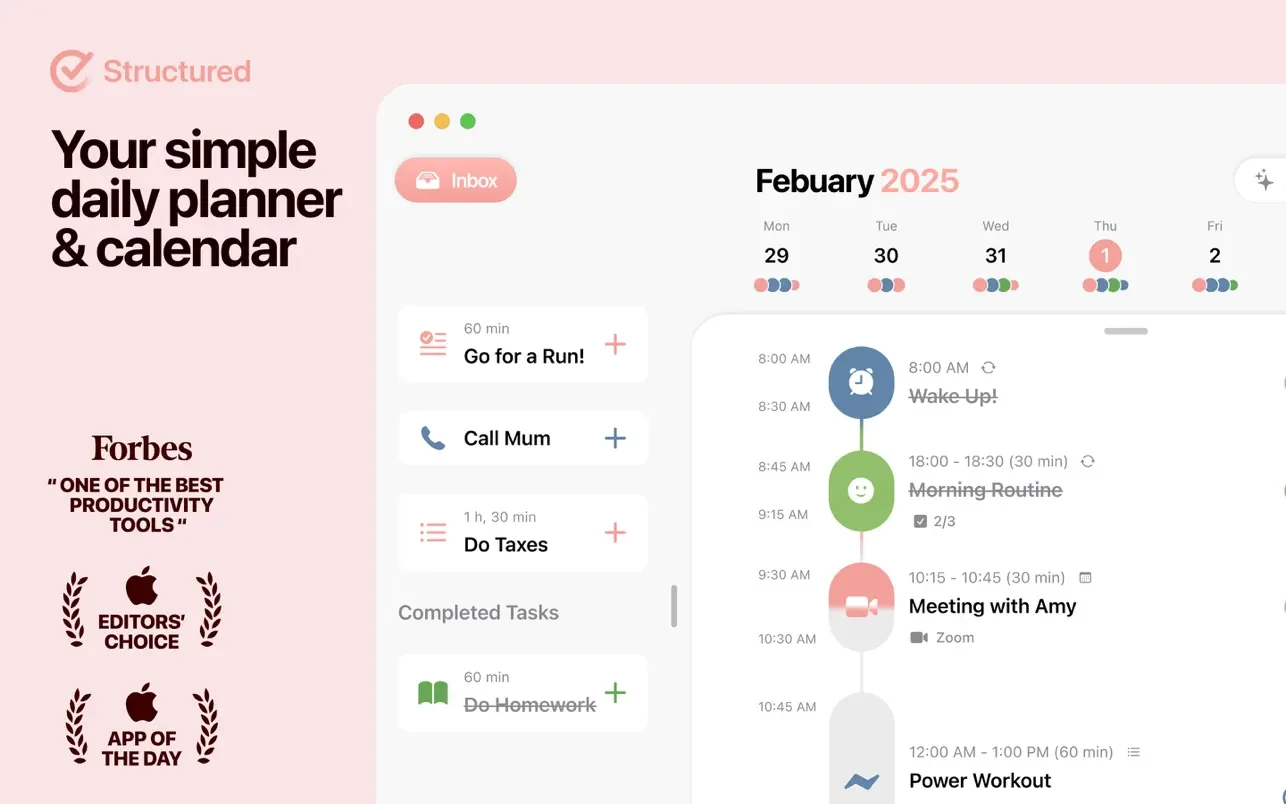
Structured helps you organise your day into tasks, visualise them, establish due dates, and reduce feelings of overload. Tasks, a to-do list, a calendar, a focus timer, and a habit tracker are all combined into one timeline in Structured, an all-in-one graphic daily planner.
A well-structured paragraph serves as a foundation for your writing, maintaining the coherence and emphasis of your thoughts. It typically focuses on a single key theme and is composed of four to five sentences. The TEEL method—Topic, Explanation, Evidence, and Link—is the traditional technique to accomplish this.
Oddities:
- Visual timeline: You can get the complete picture of your day by viewing all of your tasks and meetings on a single timeline.
- Quick task creation: import pre-existing events from your calendar or add tasks in a matter of seconds.
- Various viewing options for planning on any horizon, including daily, weekly, and monthly views.
- Cross-platform: use your phone to begin planning, your computer to continue, and your smartwatch to display the results.
- Focus & Habits: You can maintain productivity with the built-in focus timer and habit tracker.
- Notifications and widgets: Manage tasks and receive reminders directly from your home screen.
Four main components make up the structure of a strong paragraph:
- Topic Sentence: This should always come first. It lets the reader know exactly what to expect by introducing the main theme of the paragraph.
- Explanation: To help the reader get your point of view, the following sentence or two elaborates on the topic sentence.
- Proof: This is the evidence. You support your explanation with specific facts, figures, quotations, or understandable, accessible examples.
- Link/Concluding Sentence: The last sentence summarises the main idea and seamlessly moves into the following paragraph.